
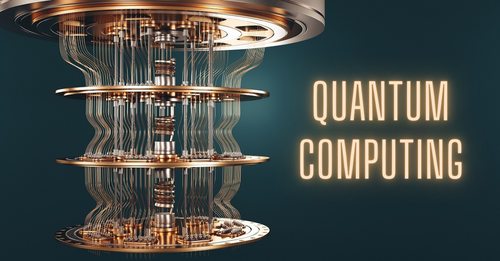
Quantum computing represents the next evolutionary leap in computational technology, promising to solve problems that are currently intractable for classical computers. As researchers make breakthrough after breakthrough, this revolutionary technology is moving from theoretical concepts to practical applications.
Understanding Quantum Mechanics
At its core, quantum computing leverages the principles of quantum mechanics, particularly superposition and entanglement. Unlike classical bits that represent either 0 or 1, quantum bits (qubits) can exist in multiple states simultaneously, allowing quantum computers to process vast amounts of information in parallel.
Recent Breakthroughs
Major tech companies and research institutions are achieving remarkable milestones. Google’s quantum supremacy claim, IBM’s expanding quantum processors, and various error correction advances are bringing us closer to practical quantum computers. These developments are not just academic—they have real-world implications for cryptography, materials science, and drug discovery.
Applications and Impact
Quantum computing’s potential applications are staggering. It could revolutionize:
- Cryptography: Breaking current encryption while enabling quantum-safe security
- Drug Discovery: Simulating molecular interactions to accelerate pharmaceutical development
- Optimization: Solving complex logistical and financial problems
- Materials Science: Designing new materials with specific properties
The Current Challenges
Despite the progress, significant challenges remain. Qubit stability, error rates, and scalability are major hurdles. However, researchers are making steady progress in quantum error correction and developing more stable qubit technologies.
The Road Ahead
As quantum computing matures, we can expect a transition period where quantum and classical computers work together. Hybrid approaches will likely dominate initially, with quantum systems handling specific complex tasks while classical computers manage the rest.
The quantum computing revolution is underway. While we may be years away from universal quantum computers, the foundations are being laid for a future where computational limits are redefined, opening doors to innovations we can barely imagine today.